Monday, April 29, 2013

What's your personal value statement? Here are my five values.

I attend a talk by Alan Hilburg ("Where is the beef?" campaign from Wendy's). His home work assignment that is that everyone should create their own value statement with no more than 5 values. It's surprisingly difficult and here is my attempt.

1) Integrity : Be honest with myself foremost and always then be honest with everyone else. Doesn't matter if this is the first time or the last time I might meeting the other person.

2) Humility : Be respectful of all opinions and actions, I don't have to agree but I'll always try to listen and to understand a different perspective. Be considerate of my abilities and limitation, understand my strength and weakness so I know when and where to be helpful or asks for help.

3) Simplicity : Truth is simple. Look for that deeper truth in any situation so don't be overwhelmed by the initial complexity. Keep my life as simple as possible. Don't be burdened other people's complexity or expectations.

4) Learning : Always be learning and trying to connect the dots between different ideas and concepts. 

5) Figure-It-Out-And-Get-It-Done : Finally, the most important value. Put all my abilities, network, resources, learning to work so what is important gets done.


Here are other values that I considered but seems less of a core value or too similar to other values. 
Excellence
Resilience
Thoughtful
Listening
Responsible
Resourcefulness
Planning


Sunday, April 28, 2013

3 key ideas from Alan Hilburg presentation at Tech Coast Venture Network


My first event at TCVN. It was an interesting meeting. I walked away energized and excited about future possibilities. I would be interested to attend again. 

Here are my notes from the speaker Alan Hilburg. He was an excellent speaker. It helps that every once in awhile  he pulls out a $20 and incentivize people to answer a question. It's a good public speaking tip. He practices what he preaches. So 3 keys ideas from his talk. I share them here on my blog. 

What is a brand? 
It's not your website, product, brochure, slogan, etc. 
Brand is the experience the marketplace and trust people has in the company.
Branding is emotional and NOT rational.
Think about your brand protagonist

3 principles of a brand
1) OIVSIO - outside in vs inside out.
2) Context Before Content
3) Pull vs Push
push - inside out. constantly sell
pull - create condition that people want to be part of experience greater than themselves. 

3 Basis of good relationships. 
1) know their fear. 
2) know what define their success
3) know what makes them happy


Friday, April 26, 2013

Product Manager - The Silent Conductor

Product Manager as conductor is not a unique metaphor. Two good examples of the metaphor from Kellogg and BBC. I want to take this concept one step further. A good product manager is not only a conductor between different business functions. The great product manager should be a silent conductor as explained by Benjamin Zander, conductor of Boston Philharmonic. Recently, I read his wonderful book called The Art of Possibility. This is an inspiring book about becoming a better and more engaged person. Back to the idea of the silent conductor, I quote from Zander's book.
I have been a conductor for nearly twenty years when it suddenly dawned on me that the conductor of an orchestra does not make a sound. ... his true power derives from his ability to make other people powerful. I began to ask myself questions like "What makes a group lively and engaged?" instead of "How good am I?"
This approach precisely describes the role of the Product Manager. PMs usually doesn't have direct control over any of the business functions but are still expected to bring about a product to life and make it successful. Seems like a paradox to some people, but I don't think so. The lack of control means functional independence. This independence enables a PM to become a credible advocate for the customer, product, or whoever isn't currently in the room (link to Ken Norton's (Google Group PM) article on Product Management). The PM brings the vision of the ideal customer experience as delivered by a product. PM creates the "team ego" by making sure everyone feels powerful and successful. We are not suppose to talk about "feeling" in the workplace. We are all suppose to be professionals and keep our feelings in check. We are all human and we all have emotions. No matter what the work, in the end, work are done by people. So feelings matters and everyone works better when their feel respected.

It's harder than it sounds, engineers wants to do engineering things and they want to talk engineering talk. It's never easy to bridge that expectation and language gap. The best PMs are able to draw out the engineers using their language, to get the best ideas, and get them really engaged on how to create a better customer experience. PM makes engineers lives easier so they can keep doing the engineering things, only with better focus and more precise deliverable. Now, imagine doing the same work for all the different business functions: accounting, support, operation, sales, marketing, and legal. Each group have their own personalities, languages, and expectations. PM inspires everyone so everyone brings their 'A' game together to deliver on the same product vision.


There is another reason that I like the silent conductor metaphor. Notice that the conductor is the only person that the audience can't see the face during the performance. The conductor is front and center, but the face is hidden. The conductor is given this great responsibility and power to inspire and lead this group of talented musicians. As a part of the responsibility, the conductor submits his ego to the team and remains hidden during the performance. I understand that in practice, conductor's face can't be seen while his doing the job. To me, this is one ideal of humility. I have said to my team, I'm not the ceiling that limits you, I'm the floor that you stand on so you can reach high. My job is to be calm, on an even keel, so everyone can do their best.

image from: http://photos.instantencore.com/87500/87500_1024.jpg
In short, your mission, as a product manager, should you choose to accept it. Deliver an experience that customers LOVE through a product where you inspired everyone on the team to feel POWERFUL..like a silent conductor.

Monday, April 22, 2013

How to boost performance and convert an old laptop into a media center and file server.

Recently my old media center desktop died. I guess computer age counts in dog years. The machine was only 7 years old, but died on the operating table from a simple hard drive upgrade procedure that I have done many times (aka. it's not my fault. :) )


I debated for a while if I wanted to take this PC in for repair, but the estimated 1 to 2 hr to diagnose and fix the problem simply makes no sense for this old PC. Electronic recycle is the only way to go. I striped the hard drives, and dvd-burner. I should try to sell the working parts on the craiglist but it's not worth my time to bother.

The old PC was the file server, central backup, video transcoder, and media server for the home network. I needed to find a replacement fast. The cheapest new desktop I could find was a few hundred dollars and terribly under-sized in storage. I would need to upgrade the internal component to get the system working as before. It was not worth the hassle.

Geek out time! 

I have a 3 years old laptop (HP touchsmart tx2 with AMD Turion dual-core CPU) that was gathering dust. Instead of a new low-end desktop, I figured for the same price I can seriously beef up this laptop and turn it into a decent media center. I did a good amount of research to make sure I got maximum bang for the minimal bucks. I budget $300 and brought the following items:

Click on the links to get exact store and product that I purchased:

Solid State Drive 128GB : $130


USB 3.0 ExpressCard: $13


USB 3.0 hard drive docking station: $50


3.5" 1 TB 7200 RPM internal HD: $75


USB TV tuner: $50


USB enclosure : $6


MCBuddy: donationware


The experience was tedious but not too painful. I took some extra steps to ensure optimal system function. Here are the major steps.

1) Removed the original internal 5400 rpm HD from the laptop
2) Replace the internal HD with new SSD HD
3) Rebuild Windows 7 Home Premium from the installation disks
    3a) I thought about upgrading to Windows 8, but the media center is NOT included with the home edition, I would have to upgrade to Windows 8 Pro then pay even more to get the media center pack.
4) Installed the USB 3.0 ExpressCard and drivers.
5) Plugged in the USB 3.0 HD docking station into the ExpressCard
6) Inserted the new and old HDs from old desktop into the docking station
7) Insert the old laptop HD into the 2.5 drive enclosure
8) Plugged the 2.5 drive enclosure to the ExpressCard
9) Reorganized all the files for optimize usage and backup.
     9a) SSD is only used for OS and temporary files
     9b) New HD is for all the user files and recorded videos
     9c) Old 3.5 and 2.5 HDs holds the image backup for all the computers on the network.
10) Installed the USB TV tuner
11) Verified the important channels recorded in High Def and Standard Def.
12) Install MCBuddy to automatically transcode the recorded wmv videos to mp4 that can be displayed by iPad, iPhone, Android, and DLNA on various LCD TVs, xBox, media center players, etc in the house.
13) Setup DLNA on laptop and checked all the TVs throughout the house has access.
14) Put the laptop in power saving mode so the CPU doesn't get so hot . (I probably need to invest in a very quiet laptop cooling system. The fan noise is occasionally bothersome. )

Overall experience:
The easy parts:
1) The hardware upgrades were super easy.
2) Windows 7 on SSD was a nice change. Install was fast, Boot up was fast, too.

The painful parts:
1) Windows network setup with homegroup and DLNA configuration was confusing. A lot of trial and error until something worked. Not exactly sure what configuration I ended up with, probably all security disabled.
2) Painful research until I found the blog entry to change the Windows 7 registry setting to allow UNC connection from Windows XP. http://alan.lamielle.net/2009/09/03/windows-7-nonpaged-pool-srv-error-2017
3) Reorganizing and consolidating all the files spread out across multiple hard drives on the old desktop system took majority of the time.

Finally, we can kick back and enjoy the my home brewed DVR, and watch *mostly* commercial free shows on every TV, iPad, iTouch, iPhone, and Android in this house.

Could I have spend a few dollars and gotten a TiVo, Roku, etc? Sure, but where would be the fun in that? Also, I really dislike monthly subscription fees. All this setup doesn't cost me one dime in additional monthly service fees. I already pay enough monthly fee for cable, internet, and VOIP.

The end result with everything showing 


The final result. 
HD docking station is facing the wall. The LEDs are very bright and bothersome at night. 
**Need to get an attractive wire management system **


Sunday, March 24, 2013

What do you think of this idea? Volunteer Power Map : Web site and mobile app to request, plan, and promote your volunteer activities


A map based website and mobile map application that allows customers to request, plan, and promote their volunteer activities. 

The vision and purpose of this website is to promote and track the power of volunteers around the community! It would be extremely heartwarming to visualize the power community service in near real-time and historically (as measured in volunteer person-hours). There are too much sad, bad news and negativism, but I know there are so many people that are giving their time and energy but that information is not captured effectively to drive and encourage other people to do more.

4 potential types of customers and their pain points
1) People see problems in their community and want to make suggestions
- A street block that needs some trash clean up
- An abandoned park that needs some gardening
- Graffiti filled wall that needs to be repainted
- Local library needs volunteers to sort and organize books
- A senior citizen needs help to walk the dog.
- School teacher that needs volunteer for class activities

2) People looking for ways to help their community
- Cub scout / boy scouts that trying to earn merit badges
- Local companies / employees that want to be give back to the community
- High school clubs
- Internet Meet ups.

3) People that already have specific volunteer plan and asking people to join them and promote the activity. 
- Street clean up starting on Monday 11 am, to start 1st and Ast. Please RSVP so we can plan the number of trash bags, and gloves.
- Beach walk and clean up meeting on Sunday afternoon start from the pier.
- Curb side car wash to raise money for church on Sunday 1pm to 4pm 

4) People that want to track their volunteerism activities or give credit to other peoples volunteerism activities.
- A soccer team wants to recognize the coach for her effort
- PTA leadership wants to recognize a special event coordinator
- A high school student wants to track and share pictures and video from his volunteer fun events

Use Cases:
1) Dashboard to visualize the power of the community service activities by location, a group, or an individual contribution. Imagine a color coded map overlay that shows the density of volunteer person-hours over a period of time. Also app where acts of kindness can be visualized and promoted in near real-time. The map would show glittering stars as people contribute and sign up for community services.

2) Mobile app that customers can use to quickly take pictures of issues around the community. Using a mobile map application, people can quickly add suggestions and browse existing suggestion in the same area. 

3) Customers could use the app for monitoring and filtering for volunteer requests, or events around specific locations (home, school, or work), or favorite activities such as gardening, or painting, or available free time set aside for volunteerism. 

4) Customers could use the app propose, gather volunteers, vote, and coordinate location, time, and supplies to the community service activities.

5) Customer to track and promote their volunteer activities achievements, through check-ins to specific location and events.

6) Customer to track and promote other people’s volunteer activities achievements, through check-ins to specific location and events.

Some people get there ideas in the shower, for me, it's the middle of the night when I can't sleep. A phone call woke me up 4am and I couldn't go back to sleep and this idea came to me.  This is probably not a unique idea, but I think if we can start an open source project, we can build a pretty usable and successful website and mobile application.

Let me know if you like the idea, and features suggestions on twitter, facebook, and Google+.

If you run a community service program, let me know how you would use this platform to drive greater number of volunteers and show the power of your volunteers.

If you know of a similar platform or application, let me know. Maybe this should be an add-on to Google+ or four squares, instead of stand-alone app. I welcome all suggestions to understand what technology platform is the most effective way to capture and visualize the power of community activism.

If you have a similar open source project, let me know if you need a volunteer.

If I can gather some serious number of “likes”, retweets, and +1s, I will start developing a new open source project and gather other volunteers to start building this web and mobile application.


Saturday, March 9, 2013

Parenting as Lean Startup


I'm currently reading "The Lean Startup" by Eric Ries, but this blog entry is not exactly about the book, rather it's a cross pollination of two ideas and goals that I have been working to improve. How can I enable the company to be a more successful startup and, on a personal level, how can I enable my children to become successful adults. While reading the "The Lean Startup", it just dawned on me that Parenting is Management and a Startup.

Eric's definition of startup is resonated with me "A startup is a human institution designed to deliver a new product or service under conditions of extreme uncertainty." I would modify Eric's definition as follow for parenting: Family is a human institution designed to deliver the next generation of adults under condition of extreme uncertainty. The part about extremely uncertainly clearly nails the problem I think parents face. There are 4 major reasons why parenthood is all about facing uncertainty.

1) No one has any experience as a parent for the first time. There are no user guides that will ever explain what it means to be a parent.

2) Every child is different. Some child might look like one or both parents, but personality is all their own. I hear parents talking about how one child are so much themselves as a child. It's possible, but I feel it is just wishful thinking or emulation. Parent should just accept that kids are different and any similarities are temporary and coincidental. Instead, focusing on their uniqueness and celebrate their differences and inner strength would be more successful in the long run.

3) No one can predict the attributes, conditions, and knowledge necessary that determines definition a successful adult of the future. For all we know, we might have a nuclear winter and the most vicious human characteristic is necessary condition for survival. Even without going to such extreme, I often hear parents planning their children's future career or field of study. I always wonder, how one knows if those jobs will even be around. My job title didn't even exist 50 years ago. 
Globalization and software and robotic automation are changing job title and positions at an incredible rate. How does anyone know what job might be good or bad in 10 or 20 years from now.

4) The present day problems are vastly different from problems of the past. Talking with our parents, I get a sense that the problem of old is constraint. Our parents tried to optimize based on limited options due to money, job, immigration, etc. But I don't think that will be the problem for our children. Our children will have the problem of choice. Given almost infinite number of choices, how do parents optimize based on environment / innate talent fit and have the discipline to stay focus long enough to get meaningful results? (another phrase I ripped off... Market/Product fit changed to Environment/Talent fit) Just consider the simple example of after school activities. There are the traditional activities: biking, swimming, scouting, soccer, baseball, piano, etc. But as I recently found out, here in southern California, we have Olympic level instructors for figure skating, archery, fencing, taekwondo, acting, modeling, and much more teaching lessons for children as young as 3 years old. Many of these classes have long waiting list because too many parents trying to push their kids into the programs.

I think Eric's definition of startup is actually a very canny fit for parenting and lean startup 5 principles are also right on target.

1) Entrepreneurs are everywhere. Yes. This is obvious, families are everywhere.

2) Entrepreneurship is management. Parenting is management. This is might be an unusual concept but every people that are both managers and parents say they often draws from both side to help them become better in the other role. Parenting is self-management, child management, and environmental risk mitigation.

3) Validated learning. This is the key principle for lean startup and parenting. My job as a parent is not to shape my child in a certain way or path. It is my job to learn what works for my children based on careful observation of the child's specific environment / talent fit and maximum his or her abilities to become an independent, capable, and happy adult. We can debate the order of the 3 attributes but I think these 3 are my key success factors.

4) Build-Measure-Learn. Parents are not building children, it's much more complicated. Children are natural learning "machines", but they are not always selective about what they learn. So they learn mostly whatever the parents and the environment exposes to them. Part of my job as parent is to carefully select concept and knowledge based on the child's readiness. However, not every concept and knowledge would have the same rate of learning, and every child has his and her own interests, talents, and environmental influences. I believe that parents must be a curator, selectively determine what would be necessary and interesting for children to learn. We must determine the rate of learning relative to other children in similar environment and situation, and then learn whether to pivot or preserver. For children, learning is not fix concept restricted to class room or lesson plans. It's everything. Everything they watch on TV. And they especially learn how the parents act in different situation. Always assume your children are watching your every action and memorizing your every word choice.

5) Innovation accounting (vs. vanity metrics). This is another incredible key concept for me to become a better parent. Eric careful separates vanity metrics vs. innovation accounting. We all have seen the tiger parents pushing their kids with overwhelm amount of after school tutoring and demanding to have the highest test scores in the classroom, or skip to a higher grade level. I feel these are examples of vanity metric for parents. It's not say test scores are not important, they are very important, but how and why the kids work to get the test scores are just as important. The purpose of innovation accounting is to measure the impact of your change to the desired outcome. In the case of test scores, my focus as a parent is not on the test scores result, but the steps leading up to the test scores. Does the child have good environment for learning, does the child have the right tools for learning, can the child motivate himself to learn (without constant nagging or pressure from parents), does the child respect the learning by doing neat work and double check his own work, and does the child have the confidence to learn and positive attitude to deal with setback with bad results. All these steps are much more important to me than a number on the test score. I need to find ways to score myself as a parent to really make sure I'm doing the best job possible.

Let's compare the root problem of startup that the lean startup method is trying to solve. The basic premise of the lean startup method is that too much money, time, and talent are wasted building unnecessary things that don’t actually help the company create a sustainable business. The lean startup method is a framework to identify these problems as soon as possible while there is still time and money to make the necessary changes. This is also the root problem that parents must address. How do I know if I'm doing the right thing for my children that will actually help him become a successful adult? We only have so much time, energy and money, so how do I make sure I'm scoring myself and making changes all along the way. One of my worst nightmares is to pressure a child to finish college or focus on a particular sport then realizes too late that the child hates the degree or sport, ended up burning out and turns into a beach bum.

If parenting is management, then there must a set of Objective Measurement that decides if I'm doing a good job. My quarter performance objectives would look something like this for my son.

Objective: Child can independently start and finish homework on a timely manner.
1) Spend 15 minutes on school days to review the homework and make a positive comment about his learning and encourage him to learn from his prior mistakes without negative or condescending comments.
2) Talk with the teachers at least once a month outside of report card review time to discuss child behavior and challenges in the classroom.

Objective: Expand child's interest in new areas and subjects.
3) Take child to try 2 new things (or places) and we'll have a meaningful and uninterrupted by email or cellphone time with child.
4) Cut back the child's use of electrical / TV time by 20% on a weekly basis and replace them with sports or reading.

I still need to think more about how to measure and learn if these objectives actually and positively contribute child's personal growth. I'm really inspired by Eric's book for startup and even more as a framework for parenting.

Thursday, January 10, 2013

How I cancelled my gym membership, did only 2 kinds of exercises, never worked up a sweat, and lost 10 lbs in 14 weeks.

Disclaimer.. This is a personal story of how I accomplished my health goals. This is not a recommendation for anyone to attempt to follow these steps or assurance of similar results. Of course, if you have some success stories to share, I would love to hear about them. Comments are always welcomed.

Few years ago, my doctor told me that my BMI was borderline. I tried a few things, but the weight always came back. I turned 40 and got a borderline cholesterol test result. I decided now was time to get serious about my health. I had a very simple plan. I planned to adjust my behavior and attitude a little bit at a time.

I started with a very easy step. The gym membership that I paid for many years, but rarely used, I cancelled it. Because, it was time to get real. It was too hard to make the time to drive to the gym, to work out, and to drive back. The process took over an hour. Between work and kids, it was a luxury of time that I didn't have. Cancelled the gym membership was the first easy step to changing my behavior and the game.

Second, I gave myself a break and adjusted my attitude to be more positive. I told myself, I didn't pick up the weight overnight, it took many years so I was not going to lose it overnight. I specifically didn't set a weight reduction target. I was going to change my behavior a little bit everyday and have faith that, eventually, things would work out.

Third, I picked one and only one exercise. I told myself that I was going to do this one exercise everyday even if it was only for few minutes. I picked push-ups because I could do this exercise just about anywhere and anytime. No need to go into the details about how pathetic I was when I first started. It took over 2 month of ramp up before I could do a meaningful number of push-ups. I didn't try to do all the push-ups in one setting, I did them whenever I could, 1 set here, 1 set there. The range varied a lot. The main thing was that I did my one exercise, just about everyday. I did the exercise in short burst, so I had to catch my breath, but I never worked up a sweat.

There was no weight loss so far, but I was definitely on a slow and positive trend. I felt that I had more energy and slowly, I did more sets and more push-ups per set. I measured the positive trend, but not on the scales.

The exercise was pretty easy, I didn't feel tired and I didn't eat more. I just ate normally. I noticed that I don't need to eat as much. I had more energy from being more active and more positive. I actually started to eat less. That was when I decided portion control would be my forth tiny habit to develop. The method which I measured my progress with portion control was the key for this habit. I started with my normal portion. I decided how much I would cut back that day and moved that portion off  into another plate. I didn't start with a smaller portion and tried to stick with a smaller portion. I started with a normal, and actively chose to not eat some portion. This was an important psychological commitment and visible tracking method. Some days, I ate my reduced portion and ate a bit more "removed" portion. Sometimes, I was full before I finished my reduced portion. I never ate more then my old normal portion. Again, over 2 month, I saw the "removed" portion got bigger and bigger, and I was not feeling more any more hungry than usual.

I noticed a very small amount of weight loss about 1 month into the portion control habit. I was more encouraged by the trend of larger "removed" portion then the actual weigh loss itself. By this time, I was 2 month into the new habits and I was disappointed that I didn't get faster or better results. But, I stuck with the program, since I could see positive results for each of the habits.

When I regularly reached my target number of daily push-ups, I introduced my second exercise: crunches. Same basic reasons, I could do crunches just about anywhere and anytime. I did 1 set whenever I had a few minutes to spare. I didn't know if the timing was just lucky or it made the real difference. When I started my second exercise, I started to lose weight. About 3 weeks into the second exercise, I noticed I was consistently losing 1 lb per week. Pleased with the results, but I figured this was a fluke just like my other attempts before. I stayed focused on my two exercises and portion control.

The rest you know... I stuck with 5 tiny habits: cancel gym membership, positive thinking, daily push-ups, daily portion control, and daily crunches. I consistently lost 1 lb per week for 8 weeks. The holiday season paused the trend for a few weeks, then the weight loss resumed in Jan. Now I'm back to my early 30's weight, and feeling healthier and more positive. I didn't follow any of the common diet "rules". My breakfast was two cups of coffee with cream and sugar and maybe a fruit or bread. I ate lunch and had afternoon snacks. A regular dinner with rice or pasta, and ate a fruit or a bowl of cereal before going to bed. I ate all sorts of food, carbs, meats, sugar, candy, dessert, everything normally, just less. So no diet rules for me..just calorie in vs calories out.

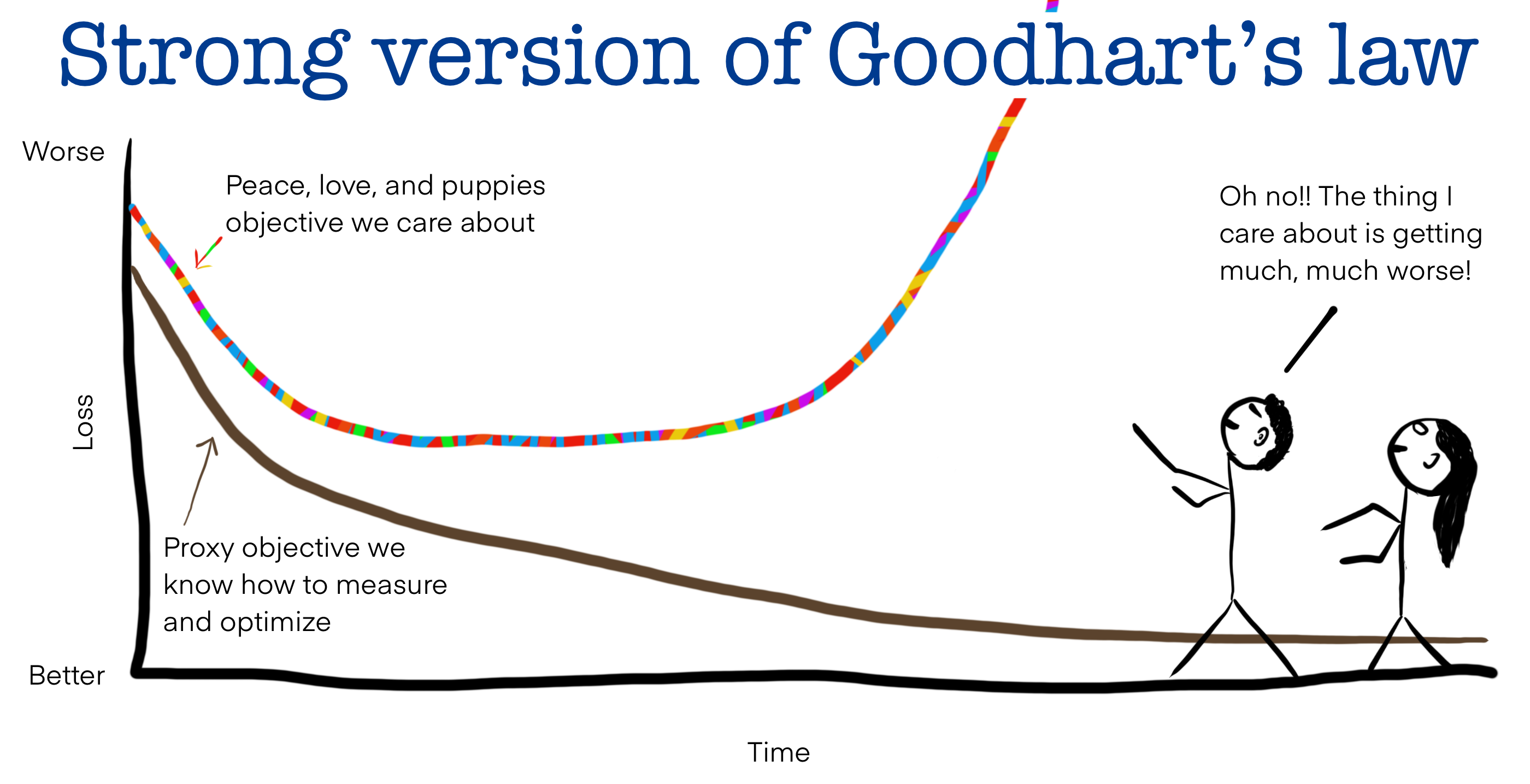
In summary, I set my objective as behavior change, and NOT weight loss. The weight loss was the desired side-effect of my behavior change. I kept the plan simple, without any time limit. With the bar set low, the only possible failure was to give up. I placed visible and measurable tracking method for each behavior change. Each behavior change was very small and gradual, and I only added one behavior change at time. The overall time was 6 month with 3 month of ramp up before I lost weight consistently. Telling my family about my objectives helped too. My kids reminded me regularly, "Daddy, did you do your exercises? Remember, you are trying to lose some weight." It really encouraged me to stick with the plan.

I plan to add more daily exercises and keep trying to lose more weight. I have already exceeded beyond my original expectations.

I credit Dr BJ Fogg, PhD for the tiny habit idea. I didn't join his website but I followed his blog and tweets for a while, and the idea of break down a desired result into many tiny habits was the key to my progress.